
Companies spent years assuming that effective Power BI analytics depended on being tied to a specific device or workplace. Many assumed that serious analytics required a powerful Windows machine and physical presence in the office. This belief limited who could work with data and slowed down decision-making. In reality, Power BI is no longer constrained by hardware — its effectiveness now depends on data literacy, analytical logic, and the ability to convert insights into action.
Today, Power BI courses are designed to accommodate users on any operating system. Data lives in the cloud, dashboards update in real time, and insights lose value if access is delayed. Learning Power BI online is no longer about finding the “right” device or setup. It doesn’t matter whether you want to use Power BI on a Mac or can only work on Linux — the courses are built for all platforms. Instead, it’s about developing data thinking — mastering analysis, modeling, and decision-making, no matter where you are or what device you use.
When Power BI becomes accessible, excuses disappear
Weak analysts often hide behind technical barriers.

“I can’t open the report right now.”
“Power BI only works on my office computer.”
“I’ll analyze it later when I’m on Windows.”
These are not Power BI limitations. They are workflow problems. They slow reactions, fragment responsibility, and create blind spots in management.
Professionals who truly understand Power BI do not wait for ideal conditions. They review dashboards when questions arise. They check metrics before meetings, during travel, or between calls. This is why modern Power BI online classes focus on access, structure, and interpretation — not just interface navigation. When dashboards are available everywhere, accountability becomes immediate.
An effective online course for Power BI teaches how to build reports that answer questions instantly.
- Which indicators matter?
- How do trends connect to business goals?
- Where do anomalies signal risk?
These skills matter far more than the device used to open the report. Modern online courses at Aristeem Academy help you move from limitations to real analytical thinking and decision-making skills.
Mobility reveals real analytical skill
Power BI reports do not create value on their own. People do.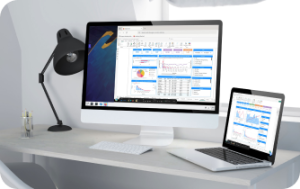
A professional approach to Power BI analytics means:
- understanding data models, not just visuals,
- choosing metrics that reflect business reality,
- spotting deviations before they become problems,
- and translating insights into action.
None of this depends on screen size or operating system. It depends on analytical thinking. That is why Power BI online courses emphasize logic, structure, and decision-making. When reporting is designed for access from anywhere, competence becomes visible. Those who understand the business ask better questions and act faster. Those who rely on controlled environments struggle to keep up.
The Power BI online course “Power BI: Quick Start” accelerates this transition. It removes artificial barriers and force learners to focus on what matters: interpreting data, not managing software constraints.
Power BI without limits
When Power BI dashboards are available on laptops, tablets, or lightweight devices, businesses gain speed and resilience. Decisions are no longer postponed. Reporting becomes continuous instead of episodic.
Now is the moment when Power BI online classes reshape expectations. Analytics is no longer something you “do later.” It becomes part of daily management. Leaders review KPIs in context, challenge assumptions immediately, and adjust strategy based on live data — not outdated reports.
That is exactly the focus of “Power BI: Quick Start” course from Aristeem — learning Power BI as a management and decision-making instrument, accessible anywhere, grounded in real business logic, and designed to turn data into action, not just reports.
In this environment, professionalism is defined by mastery of information. Those who can work confidently with Power BI dashboards from anywhere become indispensable. Not because they know every feature, but because they understand what the data is saying and what action it requires.